Home > Solution > Cooked Shrimp Glazing
Cooked Shrimp Glazing
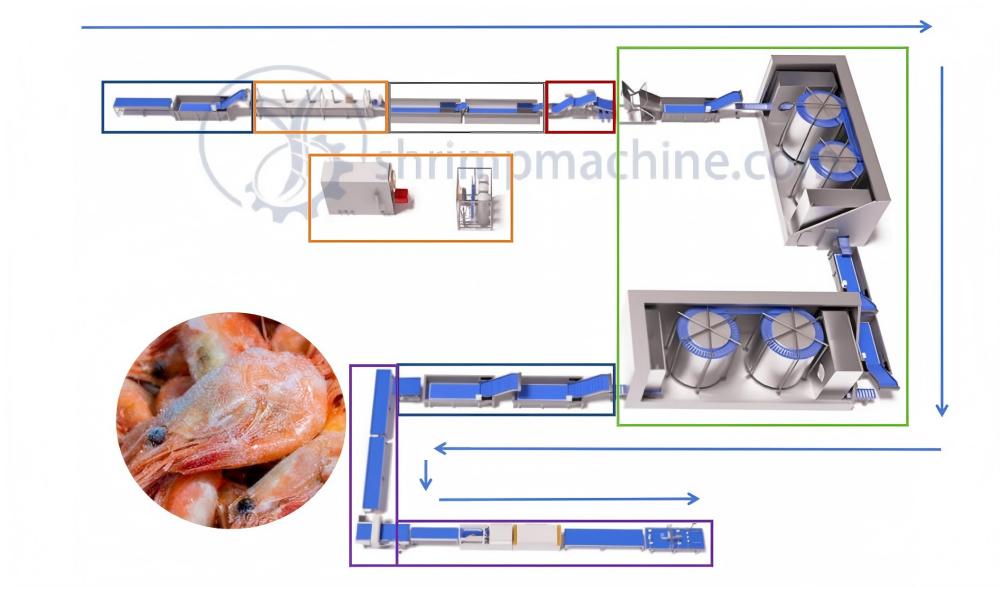
This is an example of a universal assembly line in our client’s factory. Below, we will break down the functions and requirements of each process for you.
Production Line Introduction
Step 1: First, use our specialized Swing Loader—for stable, efficient material handling—to evenly transfer freshly sorted shrimp in food-grade containers to the Bubble Cleaning Machine. This Loader preserves shrimp texture via its gentle, precise mechanism, critical for final product quality. Once transferred, shrimp undergo thorough cleaning to remove impurities like residual shells. Post-cleaning, they are conveyed to the production process’s core unit, which integrates subsequent steps (e.g., peeling, grading) to ensure smooth workflow.

Step 2: Next, the cleaned shrimp will be sent into a boiling machine or a steaming machine to be fully heated until cooked. Alternatively, our Low-temperature Shrimp Steaming Machine can be used to maintain the shrimp at 75°C, ensuring an optimal level of doneness before moving on to the next stage. For heat supply, a steam generator is usually used; for large production capacities, a boiler can be adopted to save energy. In regions with insufficient water resources, we can also assist in equipping a water filtration and circulation system.
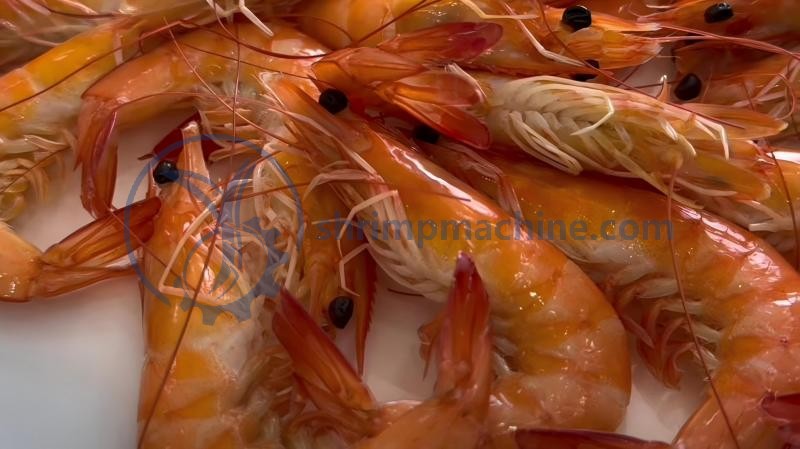
Step 3: The shrimp coming out of the shrimp boiling machine will enter the cooling machine, which mainly has two types: spray cooling and ice water cooling. Spray cooling is usually used at the initial stage, or for the first cooling step—it quickly cools the high-temperature shrimp to below 50°C to ensure safe production. Ice water cooling is now the most common choice, typically involving two cooling conveyors that can be filled with ice. Of course, customers can also opt for machines equipped with cooling pipes that use electricity for cooling, though this option consumes more energy.

Step 4: Use our Shrimp Grading Machine to sort the harvested shrimp into 4-6 different sizes, which ensures the final output meets the required product specifications. In actual processing, the grading machine is not connected to the next process. We will confirm the specific workflow based on the client’s production conditions during our offline communication.

Step 5: For the ice glazing process, the cooked shrimp will first pass through a spiral freezer or tunnel freezer, which lowers the core temperature of the shrimp to -20°C. After exiting the freezer, the surface of the shrimp will make it extremely easy for the surface water to condense into ice. Finally, it will enter a small freezer or dryer. At this point, the weight of the shrimp will increase by approximately 8-15%. If the customer needs more weight increase, simply repeat the above steps.
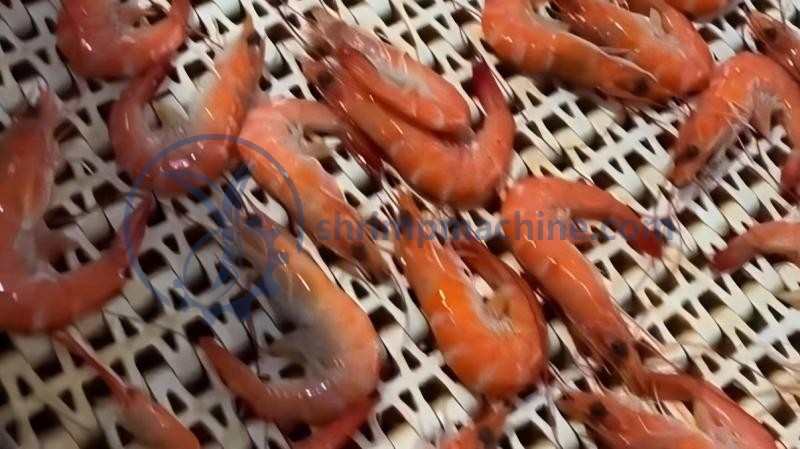
Step 6: The finished shrimp products are usually packed in boxes or bags, and then placed into cartons for transportation. The packaging process typically includes steps such as weighing and portioning, heat sealing, metal detection, and vacuuming. We need to determine the design of the machine set based on the packaging design by custome. Please contact us for more information.

Optional Spare Part and Integrated System
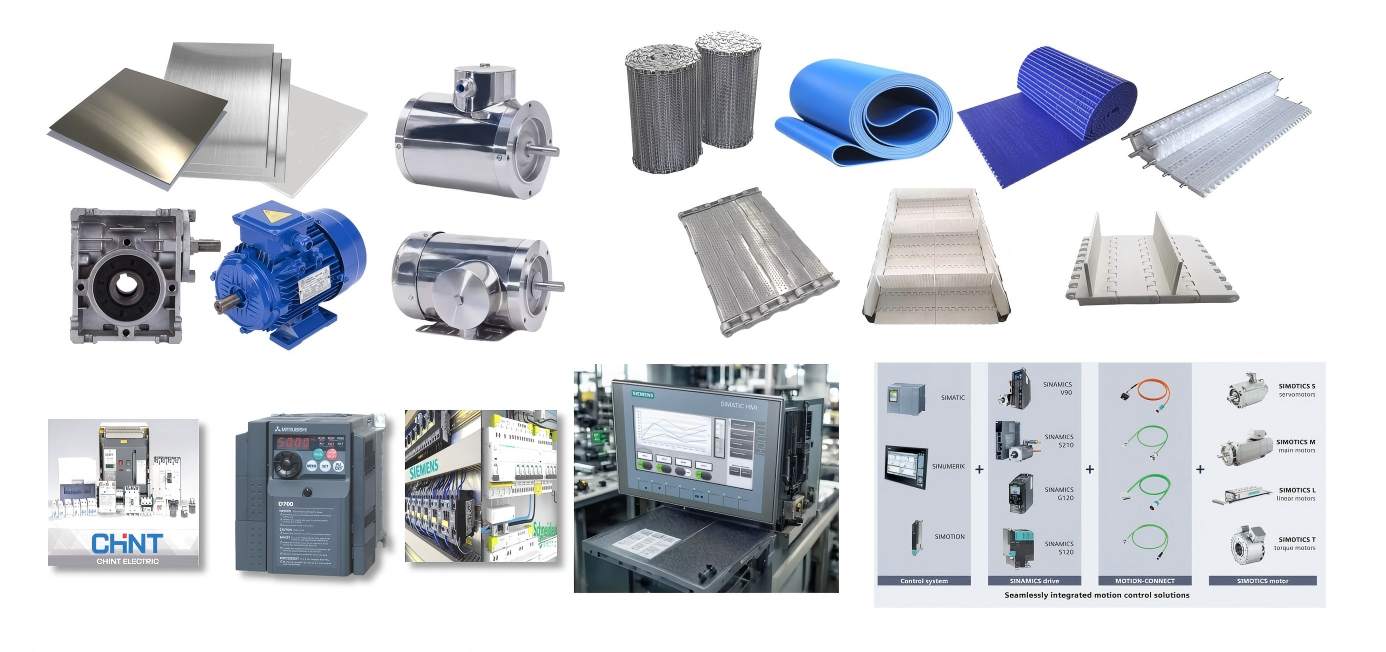
We have different spare part and options to fit what each customer wants. Since the machines touch seawater somehow, having reliable solutions is the key for long term business.
Free Choice
We offer customized solutions for different customers. Our machines let you choose different grades of stainless steel, along with cost – effective or waterproof motors. We have various conveyor belts meeting food grade standard.
We provide two operation systems. One is a manually – operable system, offering flexibility for your plant. The other is a highly integrated automated system, Integrated Control System and Digital Reporting System.