
Why Shrimp Peeling Machine Still Popular with Their Disadvantages?

I’m sure everyone has cooked shrimp at home before.
When making dinner and planning a tasty shrimp dish with other ingredients, you first cut off the shrimp heads, peel the shells with scissors, and pull out the intestines. The leftover shrimp meat makes the dish look nice and premium.
You’ll notice prepping just a small portion of shrimp eats up most of your cooking time. Then you think: I’ll just buy pre-peeled PD shrimp next time.
This is exactly the headache most shrimp processing factories face. Removing heads, shells and intestines takes dozens of workers.
It’s 2026 now. Tesla is developing home helper robots, so why can’t machines handle shrimp processing?
The truth is current peeling machines still have quite a few flaws.
Let’s take a closer look at the shrimp peeling process right now.
What Are the Disadvantages of Fully Automatic Shrimp Peeling Machines?
Shrimp processing business owners resist buying automatic shrimp peeling machines mainly for two reasons.
First is the high price
These shrimp peeling machines feature complicated build plus heavy R&D costs for ongoing improvements, so they are almost as pricey as refrigeration equipment.
Owners keep asking themselves: Is it sensible to spend such a large sum just to switch to automated production?Can profits from the shrimp peeling machine pay back the investment within one year?
We will leave these two questions unanswered and come back to them later.
Second, the shrimp peeling machine sits idle after purchase due to unsatisfactory performance
In most cases, four core reasons cause poor machine efficiency:
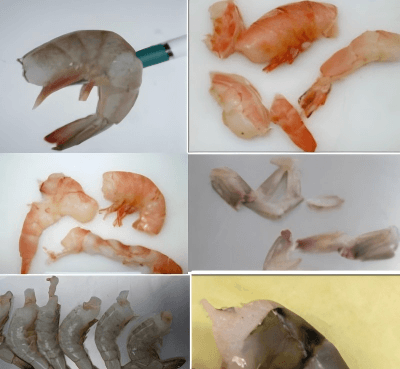
Damaged Shrimp
Common defective conditions are listed below:
- Shrimp meat split with cracks equal to or over ½ of the shrimp’s body thickness.
- Crushed or badly damaged shrimp with partial splits less than ½ the body thickness; such damage ruins shrimp appearance and market value.
- Shrimp broken into two or more separate pieces.
- Foreign leftover parts stripped from shrimp that are harmless to human health: leftover legs, shell pieces, feelers, head fragments and appendages.
- Improperly processed shrimp: uncleaned shrimp tails, incorrect peeling work and poorly trimmed shrimp heads.
Slow Processing Speed
A standard automatic shrimp peeling machine runs at 350 kilograms per hour. This output falls far short of demand for some shrimp processors.
Low Yield Rate
The biggest flaw of automatic peeling is the loss of tiny tail tips of shrimp. Though these tips only make up 2% of total shrimp meat weight, the loss adds up drastically and hits business profit margins in mass production.
Downgraded Color Grade
Excessive squeezing during peeling may scrape off natural pigment lines on shrimp surface.
In severe cases, Grade A3 shrimp get downgraded to A2 or even A1.
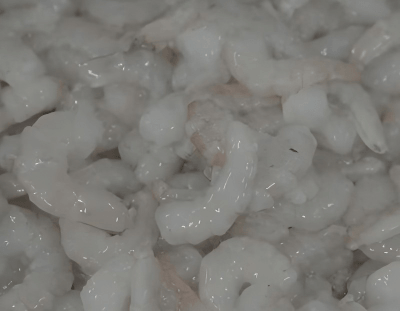
Besides, for factories in water-shortage regions, long-term use of recycled processing water stains shrimp and hurts their market appearance.
With all these drawbacks on fully automatic shrimp peeling machines, is this why many seafood factory owners still want to manual peeling?
What Are the Advantages of Manual Shrimp Peeling?
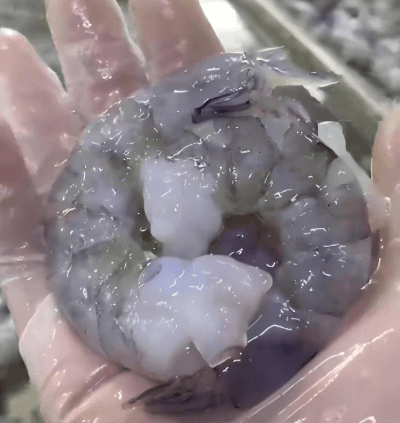
How Shrimp Peeling Machines Improve Efficiency
Is the machine really expensive?
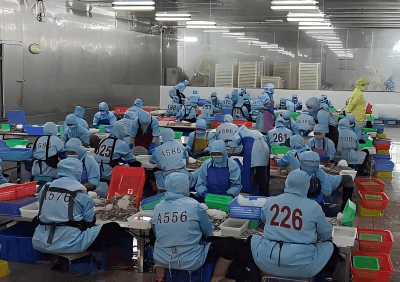
Each worker earned 6,200 RMB per month and peeled 80 kilograms of shrimp meat every day. Total daily labor cost hit 4,550 RMB.
Later the factory landed big orders, pushing daily output up to 3.6 tons of peeled shrimp, which sent labor costs soaring sharply.
Daily labor expenses climbed above 13,600 RMB. Added with losses from broken shrimp during manual peeling, hidden daily losses reached nearly 2,000 RMB.
How to solve problems of damaged shrimp and downgraded color grade?
Saltwater freezing uses chilled salt brine to quickly bring down the core temperature of shrimp. After a quick thawing step, shrimp meat separates easily from shells without sticking.
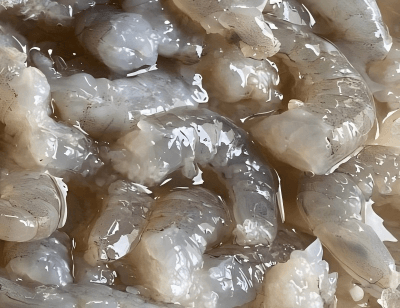
Meanwhile, hourly production capacity can even double!
This method also fixes the earlier troubles of slow output and low yield rate.
What if leftover shell fragments or tiny legs remain mixed in finished shrimp?
Normally, a shrimp impurity separator and bubble washing machine are installed right after the fully automatic shrimp peeling machine.
Products turn flawless after going through these cleaning equipment.
Would We Use Fully Automatic Shrimp Peeling Machines If We Opened a Shrimp Processing Plant?
Shrimp Burger & Shrimp Paste
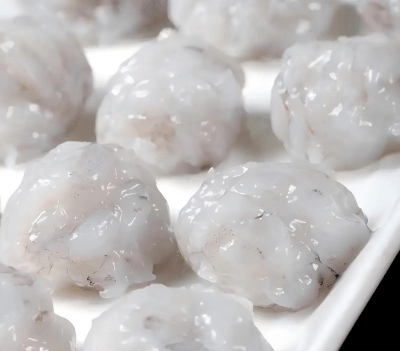
PUD / PND Shrimp
Assuming all shrimp are Grade A3 or above, we have to sort shrimp by different sizes.
Sizing below is calculated by pieces per kilogram.
Extra-large size: Manual peeling recommended
Such as U8 and bigger giant tiger prawns (>15cm).
Uneven clamping force from machine fixtures causes over 20% breakage rate.
Large size: Manual or semi-automatic peeling recommended
Including U10, U15, 16/20, 21/25, 26/30 (10~30 pieces per pound, 11~14cm body length, black tiger prawn & giant freshwater prawn).
These prawns feature thick shells and firm flesh, prone to cracking under full-auto clamps. Semi-auto machines require workers to place each prawn into grooves.
The equipment cuts shells at fixed spots, achieving meat integrity close to hand peeling while cutting 60% of labor cost.
Nevertheless, semi-automatic equipment comes with high maintenance cost and works best for specialty products like butterfly shrimp.
Medium & standard common sizes: Fully automatic shrimp peeling is preferred
Maintenance Tips for Shrimp Peeling Machines
Daily Shutdown Routine (End of shift; prevent leftover shrimp debris buildup and rust)
- Cut off power before cleaning: After powering down, remove feeding hopper, clamping rollers, conveyor belts and peeling dies. Scrub shell and viscera residues with warm water plus food-safe neutral detergent. Never use strong acid or alkali to wash stainless steel rollers. Clear stubborn dirt in gaps with soft brushes; avoid steel wire brushes which scratch contact surfaces.
- Drain and air-dry: Rinse off detergent with clean water, open machine doors and take out sink filters. Let the whole unit air dry fully to stop water pooling, rust and bacterial growth.
- Quick inspection: Check belts and chains for stuck shrimp shells. Run the machine on no-load jog mode for 10 seconds to listen for abnormal noise or jamming.
Weekly Maintenance (Stable production, reduce broken shrimp and machine jams)
- Lubricate drive parts: Fill chains and bearings with food-grade grease; add a small amount of oil on clamping roller shafts. Keep grease away from meat contact areas to avoid raw material contamination.
- Adjust peeling clearance: Fine-tune pressing block spacing according to processed shrimp size (31/40~71/90). Standard protrusion for pressed blocks: 1~3mm. Wrong spacing causes torn meat or incomplete shell removal.
- Clean electrical compartment: Blow dust out of control boxes and motor vents with compressed air to prevent short circuits caused by mixed moisture and shrimp scraps.
Monthly In-depth Maintenance (Prolong service life and cut upkeep cost)
- Inspect and replace wearing parts: Rubber rollers and silicone clamping pads are consumables. Replace immediately once cracked or dented; worn rollers greatly raise shrimp breakage rate.
- Check water circuits: Unclog blocked spray pipes; maintain water pressure around 0.2MPa and replace sealing rings for any leaks.
- No-load trial run: Let the machine idle continuously for 20 minutes to monitor motor temperature and transmission vibration. Fix faults early to prevent unexpected breakdowns during peak production season.
On-the-spot Minor Maintenance During Production
- Pre-sorting raw shrimp: Remove shrimp with sharp rostrums, frozen clumped shrimp and grit; hard foreign objects damage peeling dies easily.
- Reset clearance when switching shrimp sizes: Stop the machine to adjust die gap when shifting from large to medium-small shrimp; never change settings with raw material inside.