Home > Solution > Peeling & Deveining
Shrimp Peeling & Deveining System
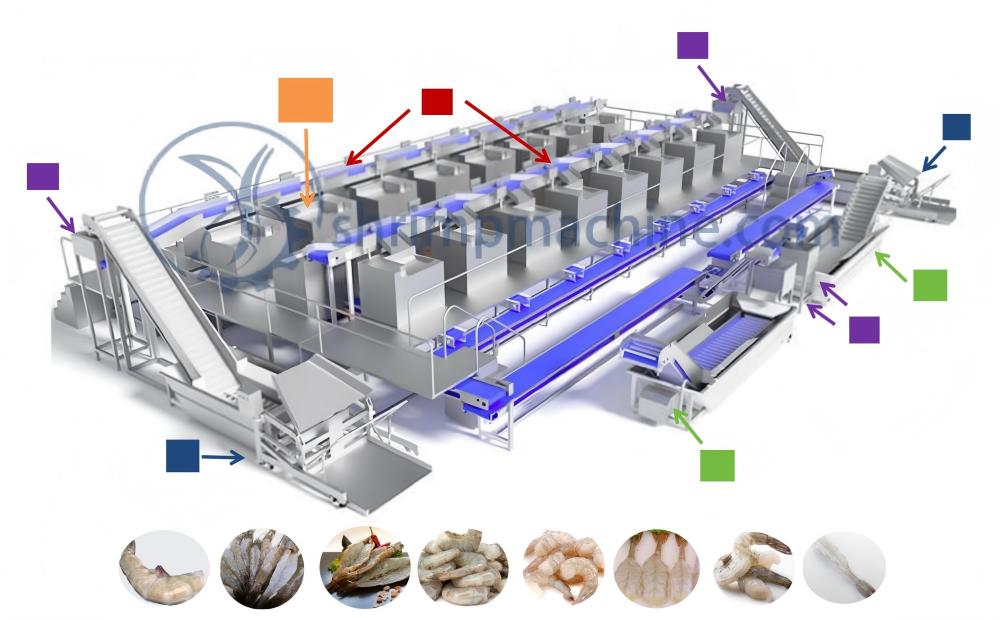
This is an example of a universal assembly line in our client’s factory. Below, we will break down the functions and requirements of each process for you.
Production Line Introduction
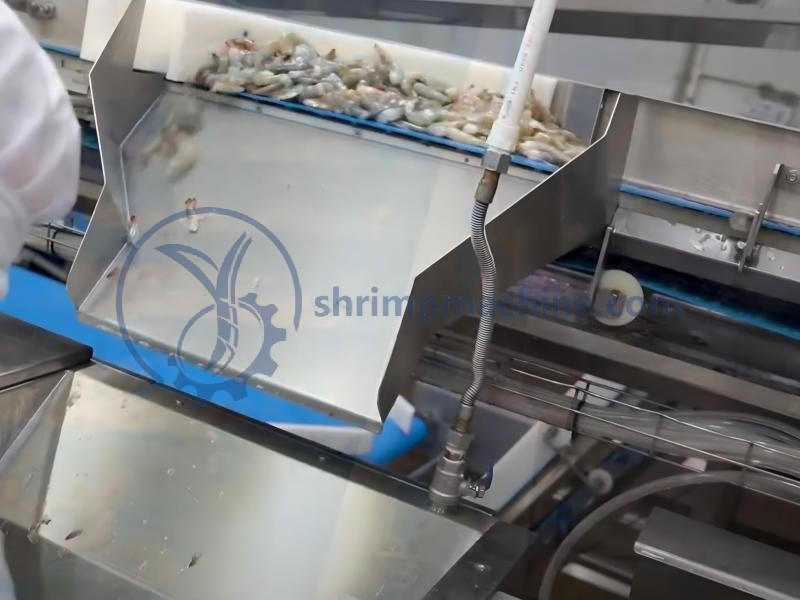
Step 1: First, use our specialized Swing Loader—for stable, efficient material handling—to evenly transfer freshly sorted shrimp in food-grade containers to the Bubble Cleaning Machine. This Loader preserves shrimp texture via its gentle, precise mechanism, critical for final product quality. Once transferred, shrimp undergo thorough cleaning to remove impurities like residual shells. Post-cleaning, they are conveyed to the production process’s core unit, which integrates subsequent steps (e.g., peeling, grading) to ensure smooth workflow.

Step 2: After being cleaned and lifted, the raw shrimp move to the next stage: the batch weighing conveyor. When the operator in front of the peeling machine presses the button next to the machine, the feeding conveyor quickly delivers a portion of raw shrimp (with a preset weight) to the operator’s workstation for subsequent work.
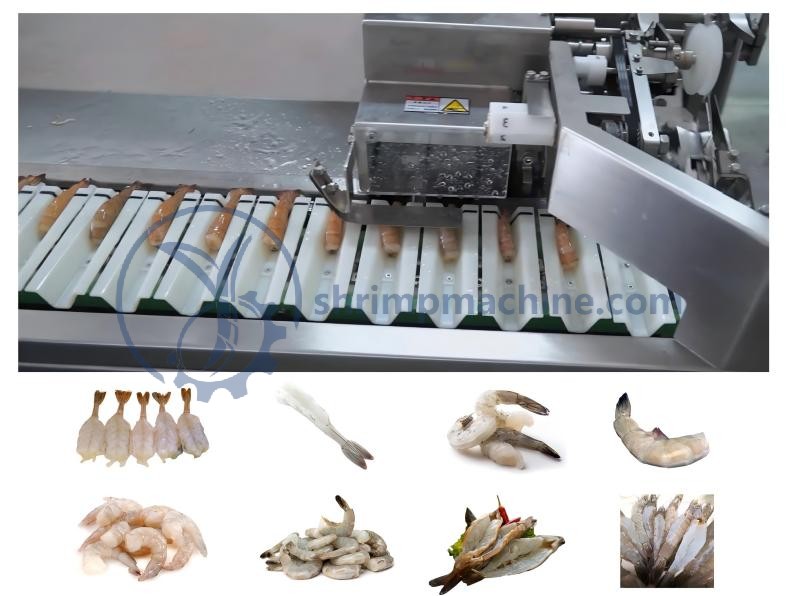
Step 3: The operator places the shrimp into the new-generation 5-servo-controlled shelling and deveining machine as instructed. The machine automatically outputs finished products and waste, which then enter their respective processes via separate conveyors. The shrimp peeling and deveining machine is preloaded with 8 product types and multiple formulas for different depths (of deveining, etc.). Only a simple formula setup is required to achieve efficient production.
Step 4: The automatic batch scale and statistical scale are used in the two links of raw material feeding and finished product discharging respectively. The entire system continuously counts the weight data of input and output, sends it to the statistical system, and then uploads it to the customer’s data monitoring computer.
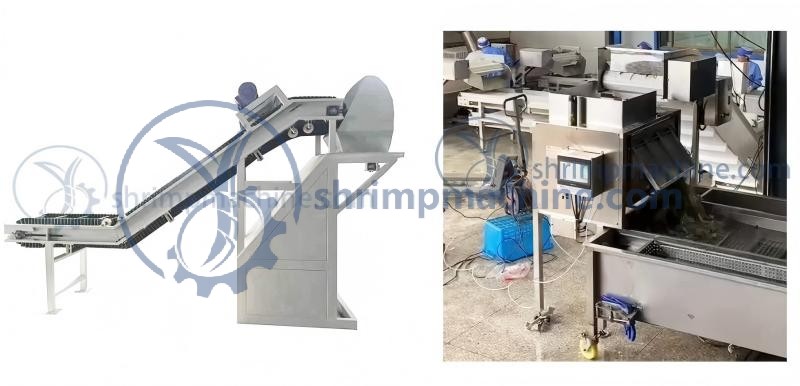
Step 5: Through a gentle bubble clean machine, residual mucus or impurities on the surface of the finished products are removed. This preserves the high quality of the finished products, which are then discharged into the loading container.
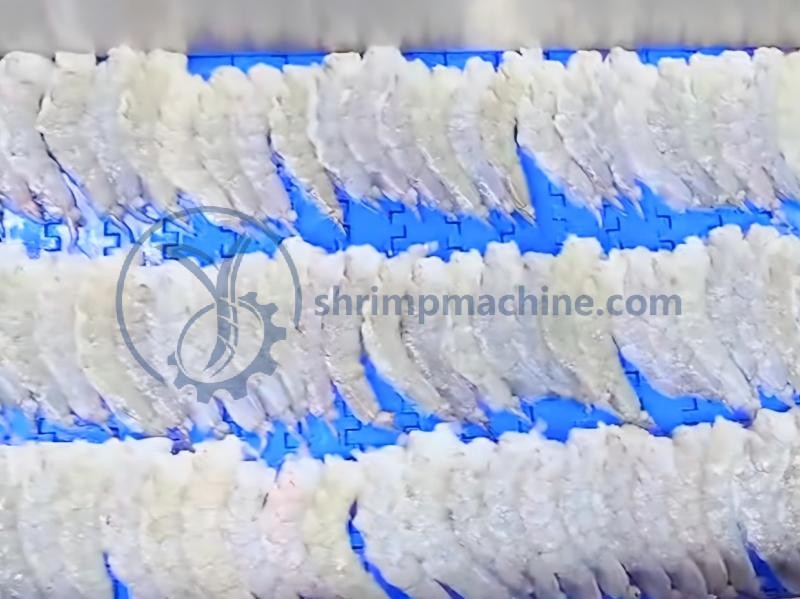
Shrimp Peeling & Deveining System
Yes, the optimal configuration for using automatic feeding units is usually 6-8 units per row. It is also the configuration chosen by the most customers.
Of course not. Customers can choose highly integrated systems or highly flexible and easy to maintain systems. Please contact us.
Optional Spare Part and Integrated System
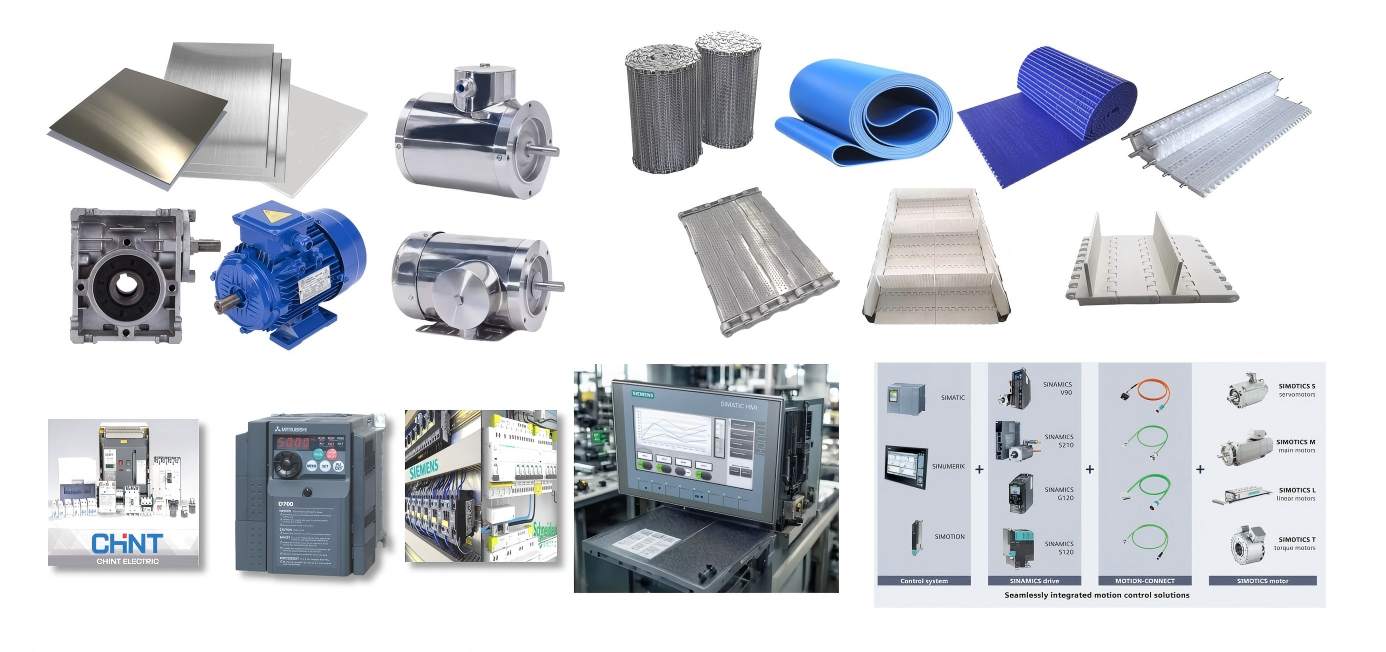
We have different spare part and options to fit what each customer wants. Since the machines touch seawater somehow, having reliable solutions is the key for long term business.
Free Choice
We offer customized solutions for different customers. Our machines let you choose different grades of stainless steel, along with cost – effective or waterproof motors. We have various conveyor belts meeting food grade standard.
We provide two operation systems. One is a manually – operable system, offering flexibility for your plant. The other is a highly integrated automated system, Integrated Control System and Digital Reporting System.