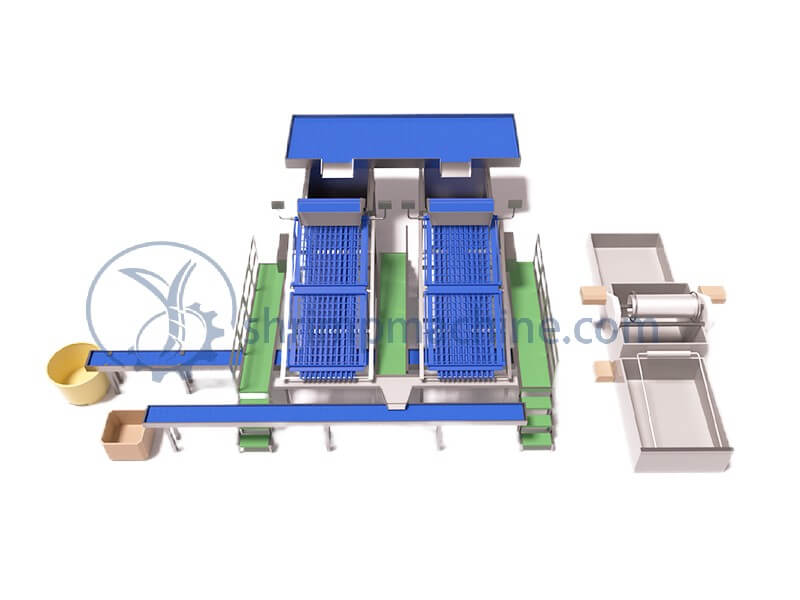
Production Line Introduction
Step 1: Raw materials are fed in according to the previous step, and the head-removed shrimp are automatically conveyed into the corresponding shrimp peeling machines via a pneumatic shifting fork conveyor, ensuring that each peeling machine operates with uniform production output.
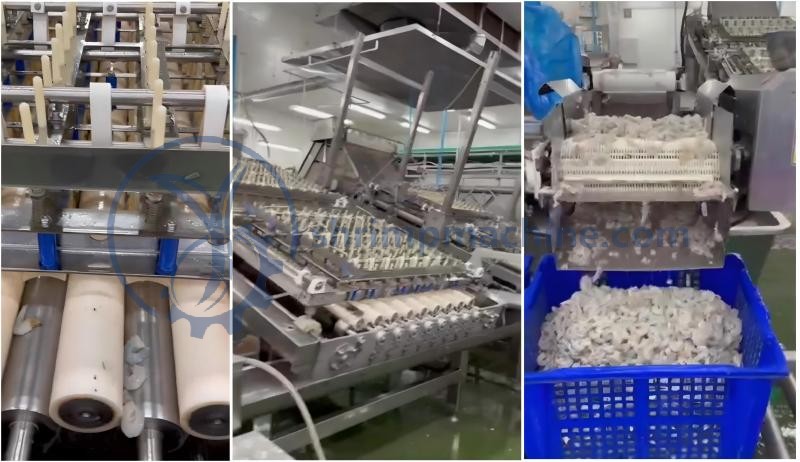
Step 2: Head-removed and shell-on shrimp enter the peeling system, where the machine quickly separates the shrimp shells from the shrimp meat. Waste materials are conveyed to the lower conveyor belt, while finished products move on to the next step. Our 3rd-generation shrimp peeling machine is widely used in the Chinese market due to their high yield rate and long service life.
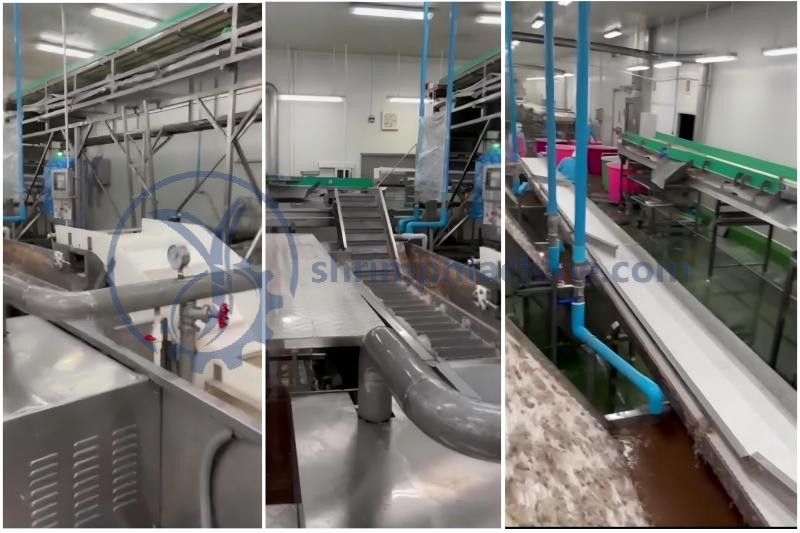
Step 3: The finished product (PUD TAIL – OFF) and waste materials such as shrimp shells are conveyed to the next step through separate outlets.
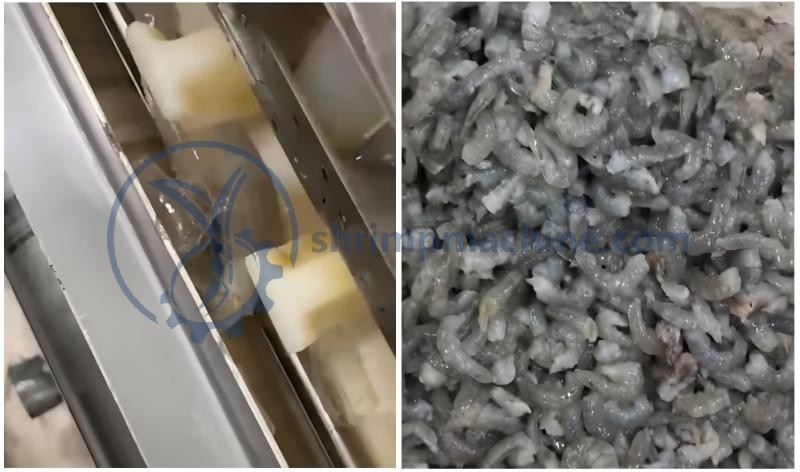
Step 4: The water filtration and circulation system separates large-particle waste. The treated water is reused in the production process, generating benefits for customers’ operations through water conservation.
FAQ For Shrimp Peeling Production Line
Yes. The process can be customized according to the customer’s budget and available space. It can be paired with standalone shrimp peeling machines.
Besides, 2-3 peeling machines can be connected in a simple series configuration to ensure flexible expansion of additional peeling systems as production capacity increases. Of course, we can also design an integrated multi-machine series system for customers, with a unified digital tracking and monitoring program, allowing the customer’s project to be completed in one step.
Usually, we recommend that customers process shrimp sized 40 and above. For shrimp smaller than size 40, we advise customers to remove the shells manually. Additionally, the appearance quality of shrimp peeled by machines can only reach a level between A2 and A1 (below A1 but above A2). If customers have high requirements for shrimp appearance—for example, if the shrimp are often used in 5-star hotels—fully automatic peeling is not suitable. However, the machine-peeled shrimp can meet the standards for products sold in supermarkets.
When the size of shrimp is above 40, it is recommended that customers use manual shelling and manual deveining. For shrimp sized 40-60, the common practice in China is to manually devein after machine shelling. When the size of shrimp is above 60, deveining is not necessary.
Optional Spare Part and Integrated System
We have different spare part and options to fit what each customer wants. Since the machines touch seawater somehow, having reliable solutions is the key for long term business.
Free Choice
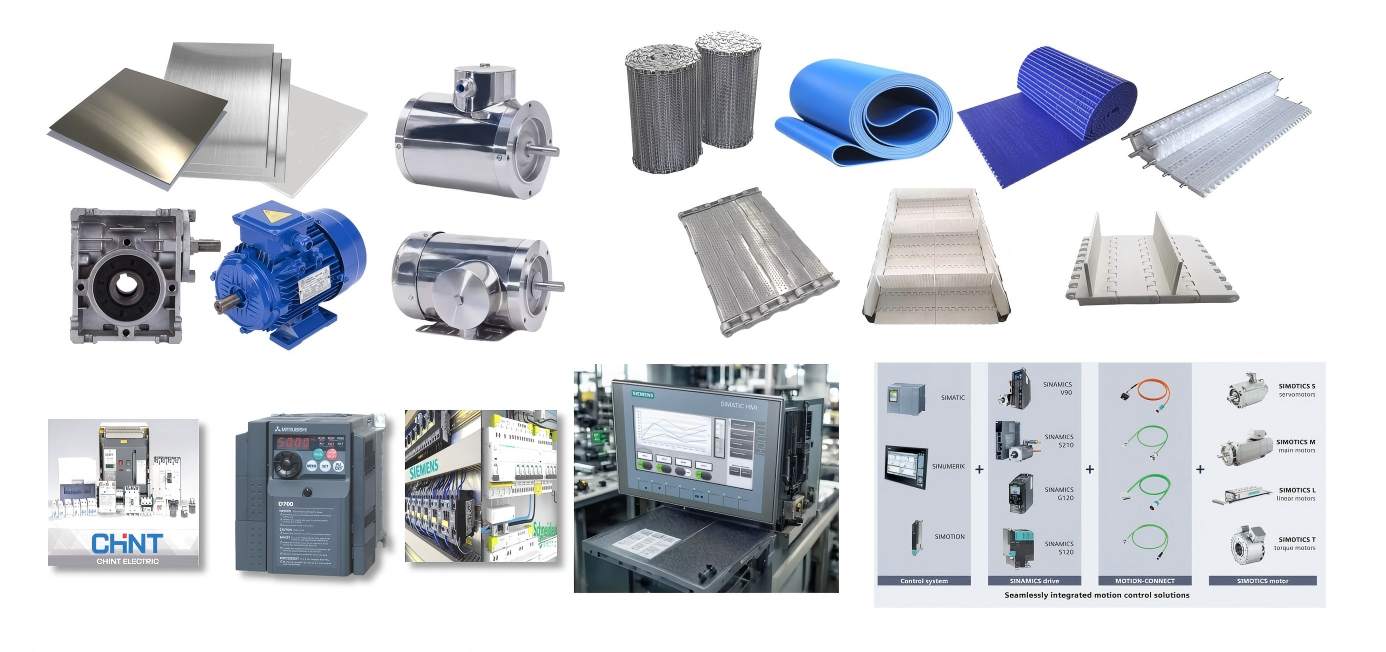
We offer customized solutions for different customers. Our machines let you choose different grades of stainless steel, along with cost – effective or waterproof motors. We have various conveyor belts meeting food grade standard.
We provide two operation systems. One is a manually – operable system, offering flexibility for your plant. The other is a highly integrated automated system, Integrated Control System and Digital Reporting System.