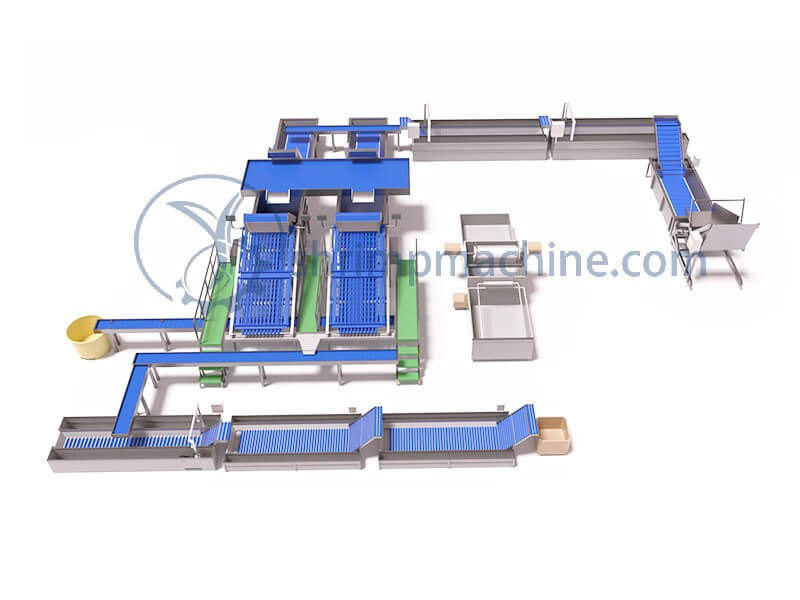
Production Line Introduction
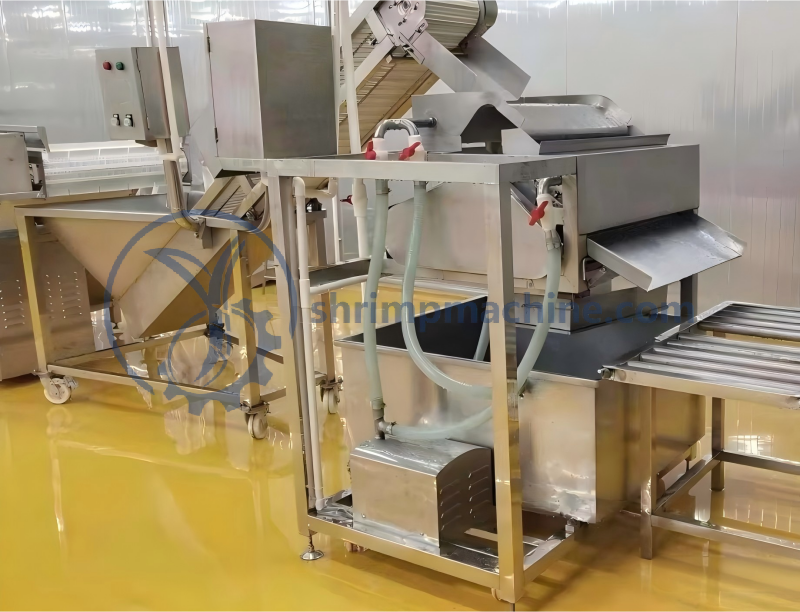
Step 1: Swing Loader—for stable, efficient material handling—to evenly transfer freshly sorted shrimp in food-grade containers to the Bubble Cleaning Machine. This Loader preserves shrimp texture via its gentle, precise mechanism, critical for final product quality. Once transferred, shrimp undergo thorough cleaning to remove impurities like residual shells. Post-cleaning, they are conveyed to the production process’s core unit, which integrates subsequent steps (e.g., peeling, grading) to ensure smooth workflow.

Step 2: The economy PUD solution uses a special high-pressure water shrimp deheading machine to remove shrimp heads. The high-pressure water loosens the shrimp heads, initially removes them, and allows some semi-finished products with residual attachments to enter the next stage of the peeling machine. It can meet product requirements while saving costs.
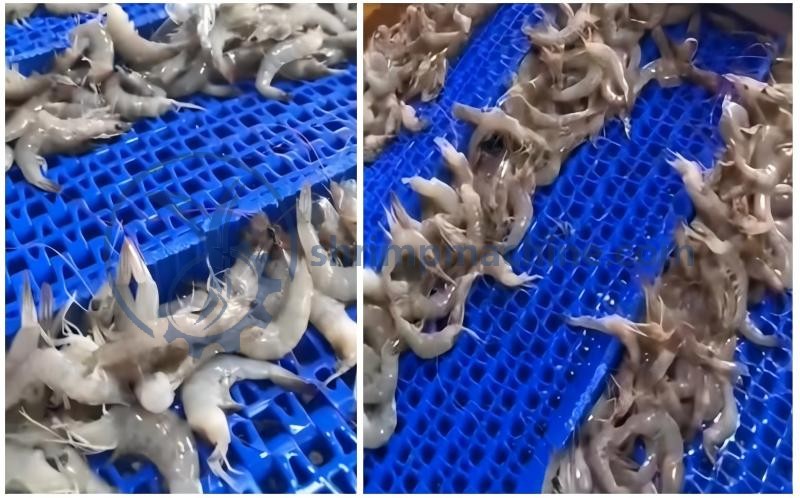
Step 3: Shrimp with partially removed heads enter the shrimp peeling machine set for separation of shells from the meat, ultimately producing shrimp meat. Since the shrimp meat contains a small amount of shrimp brains, this production line is suitable for processing large quantities of small-sized shrimp.
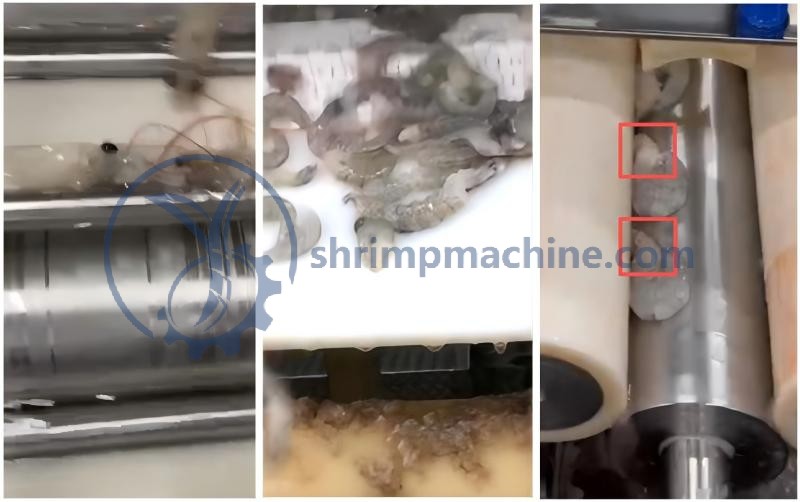
Step 4: The final output can be equipped with suitable equipment according to different customer needs. The primary step is to equip a small bubble cleaner to initially clean the shrimp meat. Then connect it to a shrimp meat impurity separator to separate the black intestines, residual small amounts of shrimp shells, etc., from the PUD.
FAQ For Shrimp PUD Production Line
1. The production capacity of the Economical PUD is 1/3 that of the Efficient PUD, while its price is approximately 1/5 of the latter.
2. For the finished products of the Economical PUD, 10% contain shrimp brains, 10% may be broken, and its yield rate is 15% lower than that of the Efficient PUD.
3. The finished products of the Efficient PUD barely contain shrimp brains, with a breakage rate of less than 3% (which may fluctuate depending on the quality of the raw shrimp).
Conclusion:
The Economical PUD is suitable for factories that process small-sized shrimp, have moderate production volumes, and aim to reduce labor costs.
The Efficient PUD is suitable for factories that intend to produce PUD TAIL – OFF in large quantities for a long time with stable performance.
Using it alone will instead lead to higher production costs due to process-related reasons.
When the size of shrimp is above 40, it is recommended that customers use manual shelling and manual deveining. For shrimp sized 40-60, the common practice in China is to manually devein after machine shelling. When the size of shrimp is above 60, deveining is not necessary.
Optional Spare Part and Integrated System
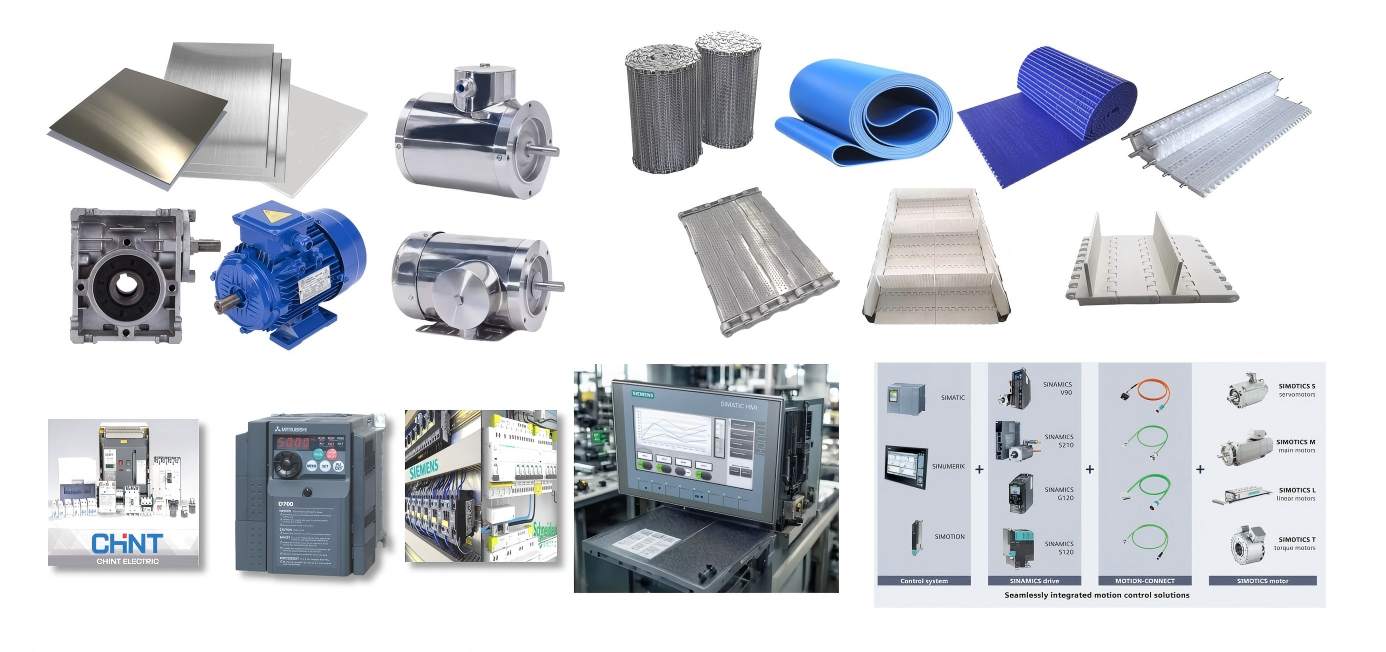
We have different spare part and options to fit what each customer wants. Since the machines touch seawater somehow, having reliable solutions is the key for long term business.
Free Choice
We offer customized solutions for different customers. Our machines let you choose different grades of stainless steel, along with cost – effective or waterproof motors. We have various conveyor belts meeting food grade standard.
We provide two operation systems. One is a manually – operable system, offering flexibility for your plant. The other is a highly integrated automated system, Integrated Control System and Digital Reporting System.